Signs a Parent Needs a Hearing Check, and How to Raise It
It usually creeps up slowly. The telly a notch louder each year. A few more “pardon?” moments at Sunday lunch. Then one day you realise Dad has gone quiet in a crowd, not because he’s tired, but because he can’t follow what’s being said. Hearing loss is gradual, and the person living with it is often the last to notice.
Raising it is the hard part. Nobody wants to make a parent feel old, and hearing can be a touchy subject. But acting a little sooner makes a real difference, and the conversation goes better than you’d expect when you come at it with care. Here’s what to watch for, and how to bring it up kindly.
Quick answer
Watch for the TV creeping louder, frequent requests to repeat, trouble on the phone, and pulling back from group conversations. If a few of these ring true, suggest a hearing check. It’s quick, painless and often free at providers like Hearing Australia, Specsavers, Audika, Bloom Hearing and Connect Hearing. Raise it gently at a calm moment, focus on staying part of the conversation rather than on getting old, and offer to book the appointment and go along together.
The signs to look for
No single one of these means much on its own. It’s the pattern that tells the story. You might notice a parent who turns the television up until the rest of the room finds it uncomfortable, or who asks you to repeat yourself often, especially when you’re not facing them. The telephone gets harder, because there are no lips to read and the sound is thinner.
The clearest sign is often social. Someone who used to be the life of the table goes quiet in a group, because following several voices at once has become exhausting. They may say everyone mumbles these days, mishear things and answer the wrong question, or miss the doorbell and the phone. A ringing in the ears, called tinnitus, sometimes comes alongside it. If a handful of these feel familiar, it’s worth a check.
Why it’s worth acting sooner
Hearing isn’t only about catching words. When it fades, people quietly step back from the things they love, the card group, the phone calls, the family dinners, because the effort outweighs the pleasure. That withdrawal is the real cost, and it can creep into low mood and loneliness before anyone connects the dots.
Researchers have also linked untreated hearing loss with staying mentally sharp and with steadiness on the feet, since your ears help you place yourself in a room. None of this is cause for alarm. It’s simply a good reason not to leave it for another couple of years. Treated early, hearing loss is very manageable, and the sooner someone adjusts to aids, the easier they find them.
How to raise it without a row
Pick a calm, private moment
Not in the middle of a noisy family gathering, and not right after a frustrating mishearing. A quiet cup of tea, just the two of you, is far better. Nobody wants their hearing discussed in front of the grandchildren.
Talk about staying in the conversation
Frame it around what they’ll keep, not what they’ve lost. “I’d hate for you to miss what the grandkids are saying” lands far better than “you’re going deaf”. Use gentle “I” observations too, like “I’ve noticed I’m repeating myself a bit lately”, so it feels shared rather than an accusation.
Make it as routine as glasses
Nobody blinks at getting their eyes tested. A hearing check is the same sort of ordinary maintenance. Pointing that out takes the sting out of it. It’s a test, not a verdict, and plenty of people walk away told their hearing is fine.
Offer to book it and go together
The single most useful thing you can do is remove the hassle. Offer to make the appointment and drive them, or sit in the waiting room with a magazine. Having company turns a daunting errand into a small outing, and it’s much harder to keep putting off.
What a hearing check involves
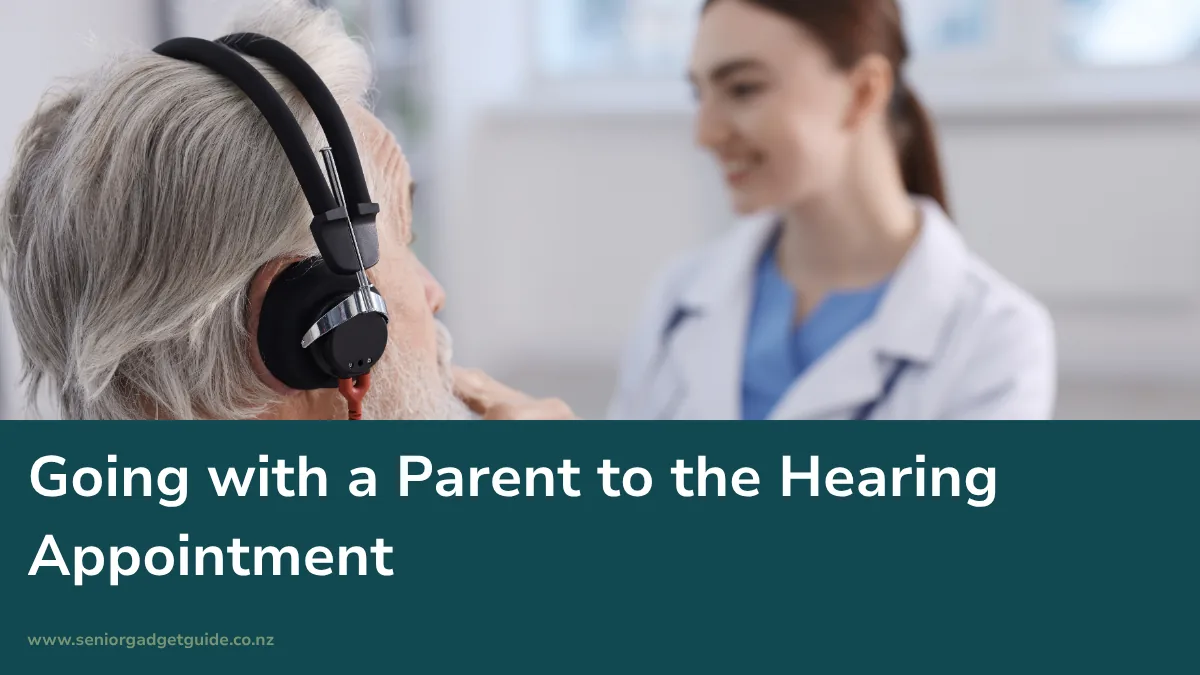
There’s nothing to dread. A hearing check takes about an hour, and it’s completely painless. You sit in a quiet booth, wear a set of headphones, and press a button or raise a hand when you hear a series of soft tones. The audiologist then talks you through the results on a simple chart. If there’s a loss, they explain the options, with no pressure to buy anything on the day.
Checks are free or low-cost at the main providers around the country, including Hearing Australia, Specsavers, Audika, Bloom Hearing and Connect Hearing. Eligible pensioners can be assessed at no cost through the Australian Government Hearing Services Program. Your parent’s GP can also point them in the right direction if they’d rather start there.
Before you finish
Download the free Family Tech Safety Checklist to help check phone safety, passwords, scam messages, emergency contacts and medical alarm details.
If they’re not ready yet
Some parents need to come to it in their own time, and pushing too hard backfires. If that’s where you’re at, plant the seed and leave it. In the meantime, small things help at home, like facing them when you speak and cutting background noise. If they ask about the cheap amplifiers they’ve seen advertised, our piece on hearing aids versus amplifiers explains the difference. And when cost comes up, our guide to getting hearing aids funded in Australia shows how far the Hearing Services Program can go.
FAQ: spotting hearing loss in a parent
What’s usually the first sign of hearing loss?
Often it’s struggling to follow conversation in noise, or turning the TV up. Missing higher voices, like children’s, is common too.
My parent insists their hearing is fine. What now?
Avoid arguing the point. Suggest a check as routine maintenance, like an eye test, and offer to book it and go with them.
Is a hearing check really free?
The main providers offer free or low-cost adult hearing checks, and eligible pensioners are assessed at no cost through the Hearing Services Program. You’re under no obligation to buy anything afterwards.
Does hearing loss affect more than hearing?
It can lead to people withdrawing from social life, and researchers have linked it with staying mentally sharp and steady on the feet. Treating it early helps.
How do I make it easier to talk with them meanwhile?
Face them, don’t cover your mouth, cut background noise, and speak clearly rather than loudly. Shouting actually distorts speech.