Questions to Ask Before Signing a Medical Alarm Contract in Australia
Choosing a medical alarm is the easy part. Signing up is where families sometimes feel rushed, especially if a salesperson is keen and the paperwork looks long. The good news is that a handful of plain questions will tell you almost everything you need to know before you commit, and Australian consumer law gives you real protection if you ever feel pressured. Ask the questions on the phone, write down the answers, and compare two or three providers side by side. A good provider will welcome the questions.
This guide lists the questions worth asking, explains why each one matters, and points out the protections you already have. None of this is hard, and none of it commits you to anything. It is simply about going in with your eyes open, so the alarm gives the reassurance it is meant to, at a fair price and on fair terms.
Quick answer
Before you sign, check the alarm is monitored, that the monitoring centre is independently graded (ASIAL Grade A1 is the top standard), what the trial period is, and whether you are locked into a contract or free to leave month to month. Ask what the weekly or monthly cost includes, whether they help you apply for funding through My Aged Care, the NDIS or the Department of Veterans’ Affairs, and what happens in a power cut. Never feel pressured by a cold call. If you did agree during an unsolicited call or doorstep visit, the Australian Consumer Law gives you a ten business day cooling-off period to change your mind.
The questions that matter most
Is the monitoring centre independently graded?
Australia does not have a single government stamp for personal alarm companies, so the quality signal to ask about is the monitoring centre. Ask whether it is graded by the Australian Security Industry Association (ASIAL) and to what grade. Grade A1 is the highest, meaning the centre is audited against the Australian Standard for things like back-up power, a secure building and properly trained operators. The established national providers, such as MePACS, INS LifeGuard, VitalCALL and Tunstall Healthcare, use professionally graded monitoring centres. If you also want help with the cost, check the provider is registered with My Aged Care for the Support at Home program, or with the NDIS.
Is it monitored, and who answers?
Make sure the alarm is monitored, meaning a staffed centre answers when the button is pressed, day or night, rather than the alarm simply auto-dialling a list of family numbers. Ask who answers, how quickly, and whether the centre calls Triple Zero (000) for an ambulance when one is needed. This is the single biggest difference in how well an alarm protects someone, and it is worth confirming in plain words. Our guide to monitored versus unmonitored alarms explains why it matters so much.
What is the trial period?
Most reputable providers offer a trial, so you can live with the alarm before you commit. The length varies, from around a week to a month. Use it properly: wear the pendant, test the button, and see how it feels in daily life. If it does not suit, you walk away.
Is it month-to-month, and how much notice to cancel?
Ask whether the plan is month-to-month or a fixed-term contract, and how much notice you must give to cancel. Many of the better providers have no lock-in contract at all, which is ideal, since needs change. If anyone tries to tie you into a long fixed term with a hefty exit fee, treat that as a red flag. Confirm the cancellation terms in writing before you sign.
What does the cost include?
Ask for the full weekly or monthly cost and exactly what it covers. With good providers it usually includes the equipment, the monitoring and any maintenance in one figure. Check there are no separate setup or call-out fees hiding in the fine print, and ask about charges for a mobile pendant or fall detection. Our guide to medical alarm costs sets out what is normal to pay.
Will you help me apply for funding?
Many people can have some or all of the cost covered. If your parent is 65 or over, a personal alarm is treated as low-cost assistive technology and may be funded through My Aged Care under the Support at Home program. People under 65 may be funded through the NDIS, and veterans through the Department of Veterans’ Affairs. A good provider deals with this every day and will help you with the paperwork and any assessment. Ask them to walk you through it. It can turn an alarm you thought you could not afford into one that costs far less.
What happens in a power cut or if I move house?
Two practical ones people forget. Ask what happens to a home alarm in a power cut, as a good base unit has a backup battery so it keeps working for a time. And ask how the alarm handles a move, since most can come with you to a new address. While you are at it, check the pendant is waterproof for the shower, the range covers the whole house and garden, and how often a mobile pendant needs charging.
Watch out for pushy sales
Most providers here are reputable, and the problems that do come up tend to be about pushy sales techniques. So if you are cold-called out of the blue and pressured to sign on the spot, take that as your cue to slow right down. You never have to decide during a phone call. Hang up, look the company up, and call them back in your own time. If a cold call feels wrong, you can report it to the ACCC or your state consumer-affairs office. And if you did agree to something during an unsolicited call or doorstep visit, you have a ten business day cooling-off period under the Australian Consumer Law to cancel without penalty.
The protections you already have
You are not on your own here. The Australian Consumer Law gives you consumer guarantees, which means a service must be provided with due care and skill, and these rights sit on top of anything written in the contract. If you agreed during an unsolicited cold call or doorstep visit, you have that ten business day window to change your mind. And if the alarm is funded through an aged-care program and the service falls short, you can complain to the Aged Care Quality and Safety Commission on 1800 951 822. Knowing all that, you can ask your questions with confidence and take whatever time you need.
Questions to ask, at a glance
- Is the alarm monitored, and who answers when the button is pressed?
- Is the monitoring centre independently graded, for example ASIAL Grade A1?
- How long is the trial period?
- Is it month-to-month or a fixed contract, and how much notice to cancel?
- What is the weekly or monthly cost, and what does it include?
- Will you help me apply for funding through My Aged Care, the NDIS or DVA?
- What happens in a power cut, and can the alarm move house with me?
- Is the pendant waterproof, and does the range cover the whole property?
Before you finish
Download the free Family Tech Safety Checklist to help check phone safety, passwords, scam messages, emergency contacts and medical alarm details.
The bottom line
A medical alarm should bring peace of mind, and the process of getting one should too. Choose a monitored alarm with a properly graded centre, ask the questions above, use the trial, and never sign under pressure. Do that and you will end up with the right alarm, on fair terms, at a price that funding may well help with. If a deal cannot answer these simple questions clearly, it is not the deal for you.
Our recommendation
Choose a national provider that uses an independently graded monitoring centre, confirm the alarm is monitored, and get the trial length, cancellation notice and full cost in writing. Ask for help applying for funding through My Aged Care, the NDIS or DVA, check what happens in a power cut, and take your time. Never decide during a cold call.
Next steps
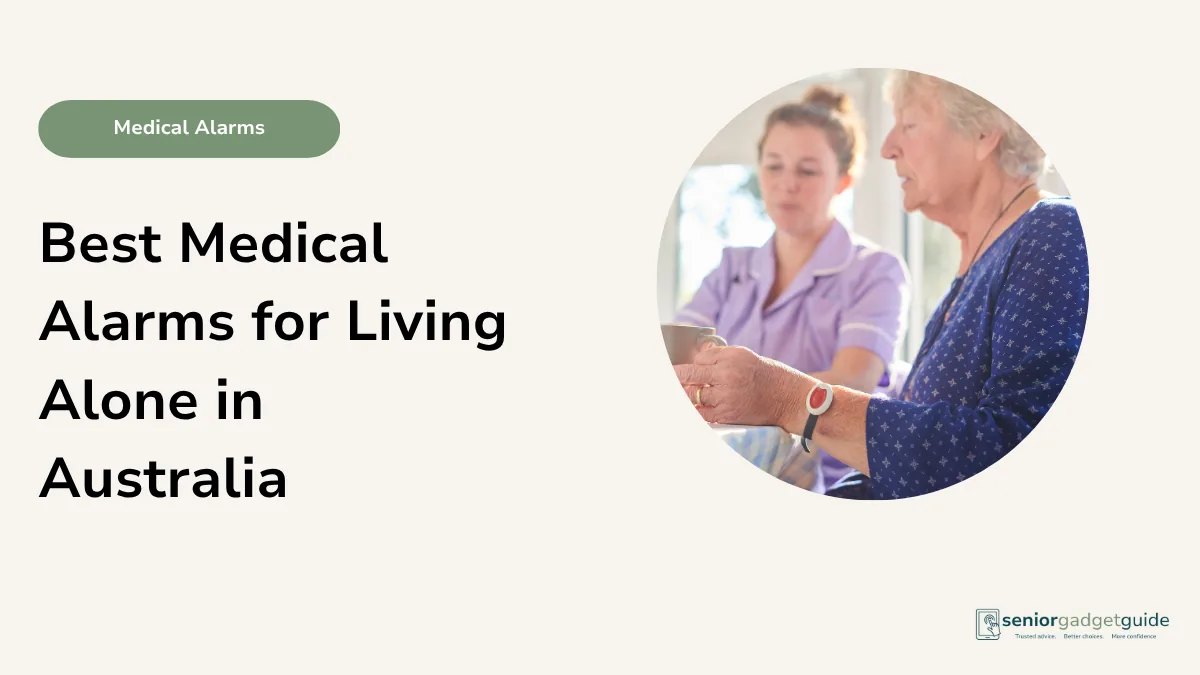
To choose the right alarm in the first place, see our guide to medical alarms for living alone and the main medical alarms buying guide. For the money side, our guide to medical alarm costs covers what to expect. There is more in our medical alarms guides.
FAQ: medical alarm contracts
How do I know a provider is reputable?
Ask whether the monitoring centre is independently graded, as ASIAL Grade A1 is the top standard in Australia, and if you want funding, whether the provider is registered with My Aged Care or the NDIS. Stick to established national providers and get everything in writing.
Can I be locked into a long contract?
You should not have to be. Many good providers are month-to-month with no lock-in. Read the contract term and cancellation notice before you sign, and be wary of a long fixed term with a big exit fee.
What if I am cold-called?
Do not sign during the call. Hang up, check the company, and call back in your own time. If you did agree, you have a ten business day cooling-off period under the Australian Consumer Law, and you can report pushy selling to the ACCC or your state consumer-affairs office.
Will the alarm work in a power cut?
Ask the provider. A good home base unit has a backup battery that keeps it working for a time during an outage. It is a fair and important question.
What if I am unhappy with the service?
You have consumer guarantees under the Australian Consumer Law. If the alarm is funded through an aged-care program, you can also complain to the Aged Care Quality and Safety Commission on 1800 951 822.